The SABRENT EC-HD2B review is for anyone weighing a straightforward way to connect two desktop or laptop SATA drives over USB.
Its dual bays and offline cloning function suit drive transfers and maintenance, with the main tradeoff being that cloning and file access have different speed limits.
SABRENT EC-HD2B Review Summary
The quick verdict
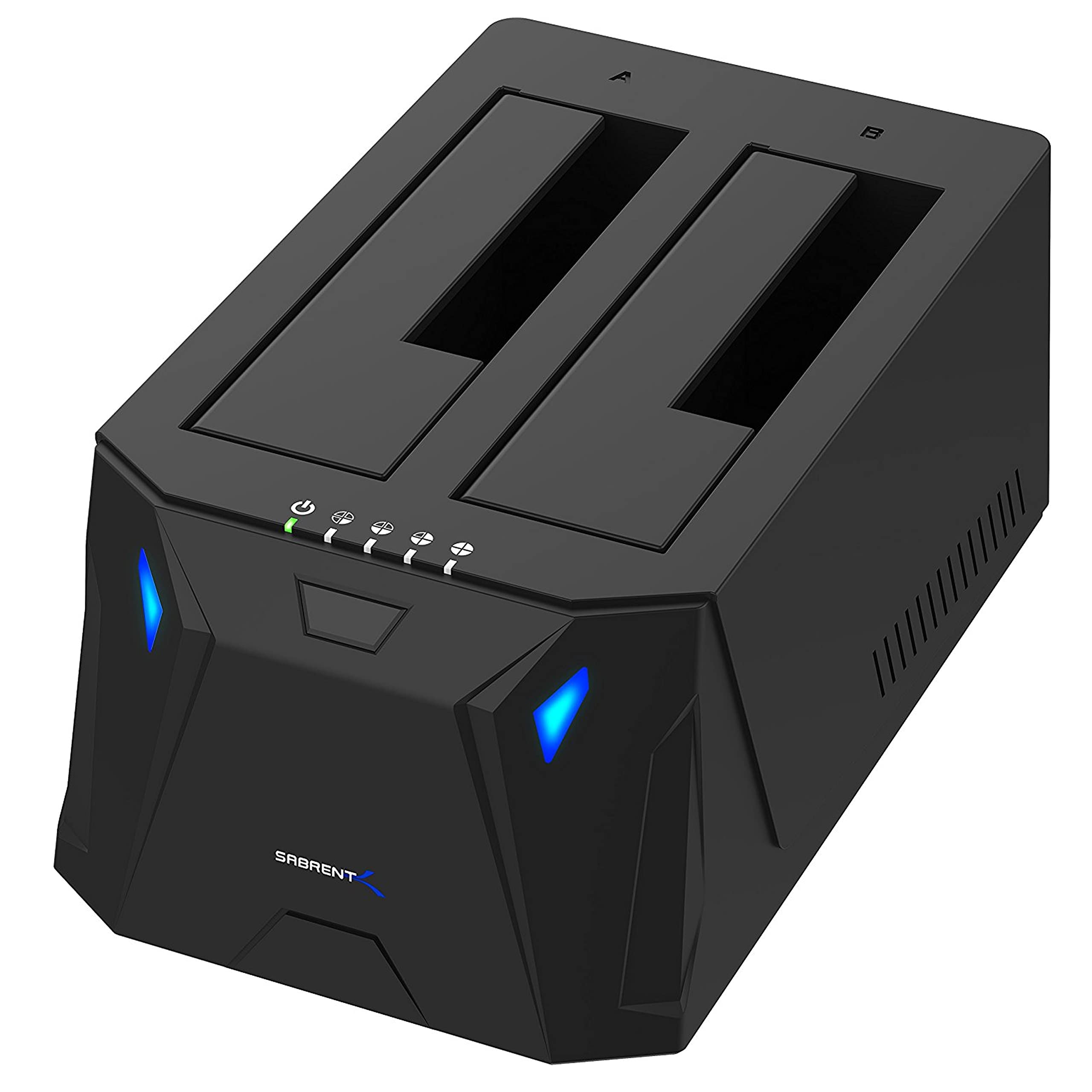
17,000+ ratings
Read Amazon ReviewsSABRENT EC-HD2B
A practical fit for users who need to access or clone 2.5- and 3.5-inch SATA drives without installing them inside a computer.
- Dual-bay dock for standard 2.5-inch and 3.5-inch SATA HDDs or SSDs.
- Supports SATA I, II, and III drives.
- Offline drive cloning, with a listed speed of up to 60Mbps.
- USB 3.0 transfer speeds up to 5Gbps; USB 2.0 up to 480Mbps and USB 1.1 up to 12Mbps.

Pros
- Two bays support a convenient source-and-destination setup.
- Works with both 2.5-inch and 3.5-inch SATA HDDs and SSDs.
Consider before buying
- The specified offline cloning speed is up to 60Mbps, so large drive copies may take time.
- Capacity information is inconsistent: the detailed bullets specify up to 10TB, while the title mentions 20+TB.
Read the full review summary
The EC-HD2B combines two SATA drive slots with USB 3.0 connectivity, so it can serve as a temporary drive reader for 2.5- or 3.5-inch HDDs and SSDs.
Plug-and-play operation avoids a driver setup, while the offline clone feature can copy one drive to another without requiring a computer for the cloning process.
It makes the most sense for home users, repair benches, and anyone moving data between compatible SATA drives or keeping a spare drive accessible.
The product information lists support for drives up to 10TB, despite the title’s broader 20+TB wording, so buyers with larger disks should confirm compatibility before relying on it.
The buying factors
SABRENT EC-HD2B Scorecard
Editorial scores reflect listed features and buyer fit; they are not laboratory measurements or customer ratings.
Drive versatility
Accepts both 2.5- and 3.5-inch SATA HDDs and SSDs, covering common laptop and desktop drive formats.
Two-drive workflow
Dual bays make it convenient to have a source and destination drive connected at once.
Offline cloning
Drive-to-drive cloning is supported without a computer, though the listed cloning speed is modest.
Computer connectivity
USB 3.0 offers up to 5Gbps, with USB 2.0 and 1.1 fallback speeds also listed.
Setup simplicity
Plug-and-play operation requires no drivers, according to the supplied product details.
Capacity clarity
The product title mentions 20+TB support, while its detailed bullets specify support up to 10TB.
Key Features and Specifications of SABRENT EC-HD2B
- Dual-bay dock for standard 2.5-inch and 3.5-inch SATA HDDs or SSDs.
- Supports SATA I, II, and III drives.
- Offline drive cloning, with a listed speed of up to 60Mbps.
- USB 3.0 transfer speeds up to 5Gbps; USB 2.0 up to 480Mbps and USB 1.1 up to 12Mbps.
- Plug-and-play setup with no drivers required.
- Detailed product bullets specify support for drives up to 10TB.
Pros and Cons of SABRENT EC-HD2B
Pros
- Two bays support a convenient source-and-destination setup.
- Works with both 2.5-inch and 3.5-inch SATA HDDs and SSDs.
- Offline cloning can copy drives without connecting the dock to a computer.
- Plug-and-play setup keeps routine drive access simple.
Consider before buying
- The specified offline cloning speed is up to 60Mbps, so large drive copies may take time.
- Capacity information is inconsistent: the detailed bullets specify up to 10TB, while the title mentions 20+TB.
- The listed USB 3.0 ceiling is a link speed; actual file transfers depend on the drives and connected system.
Who Should Buy SABRENT EC-HD2B?
Good fit
Consider the EC-HD2B if you regularly handle standard SATA drives and want one dock for both access and drive-to-drive cloning.
Having two bays can simplify transfers between a source and destination disk, while plug-and-play setup suits occasional maintenance as well as recurring use.
It is also a reasonable option for users who prefer to clone a drive without running a computer during the copy.
Before buying for a particular migration, check the source and destination capacities and keep the stated cloning speed in mind, especially if the job involves a large disk.
Who should skip it
Skip this model if your drives are not standard 2.5- or 3.5-inch SATA HDDs or SSDs; the supplied details do not establish support for other drive types.
Choose another approach if your priority is rapid cloning of a very large drive or guaranteed support beyond 10TB. Confirm capacity compatibility before purchase because the product’s title and detailed bullets give different maximums.
SABRENT EC-HD2B Review: How the Dual-Bay Design Fits
Two bays make drive-to-drive work simpler
A dual-bay layout is useful when a task involves two drives at once: one can serve as the source and the other as the destination.
That can reduce the need to swap disks during a transfer, although the product details do not describe how the cloning process handles different-capacity drives, so check the requirements for your specific migration.
The cloning speed deserves attention
Offline cloning is the EC-HD2B’s most distinctive function, but the stated maximum is up to 60Mbps.
That figure makes it sensible to plan for a potentially lengthy process when copying substantial amounts of data; it should not be confused with the USB 3.0 interface’s separate maximum of 5Gbps for computer-connected transfers.
Capacity should be confirmed before a migration
The detailed bullets give a maximum drive capacity of 10TB, while the product title refers to 20+TB support.
Since capacity is central to whether a dock can serve a particular backup or replacement drive, buyers working with disks above 10TB should verify the supported limit for their exact setup before depending on the clone function.
USB speed is only one part of file-transfer performance
The dock lists USB 3.0, USB 2.0, and USB 1.1 connection speeds, giving it a path to work with older USB systems as well as newer ones.
The interface ceiling does not guarantee a particular copying rate: drive performance and the host connection also matter, so a slower port may limit a transfer.
Alternatives to SABRENT EC-HD2B
Hard Drive Docking Stations alternative
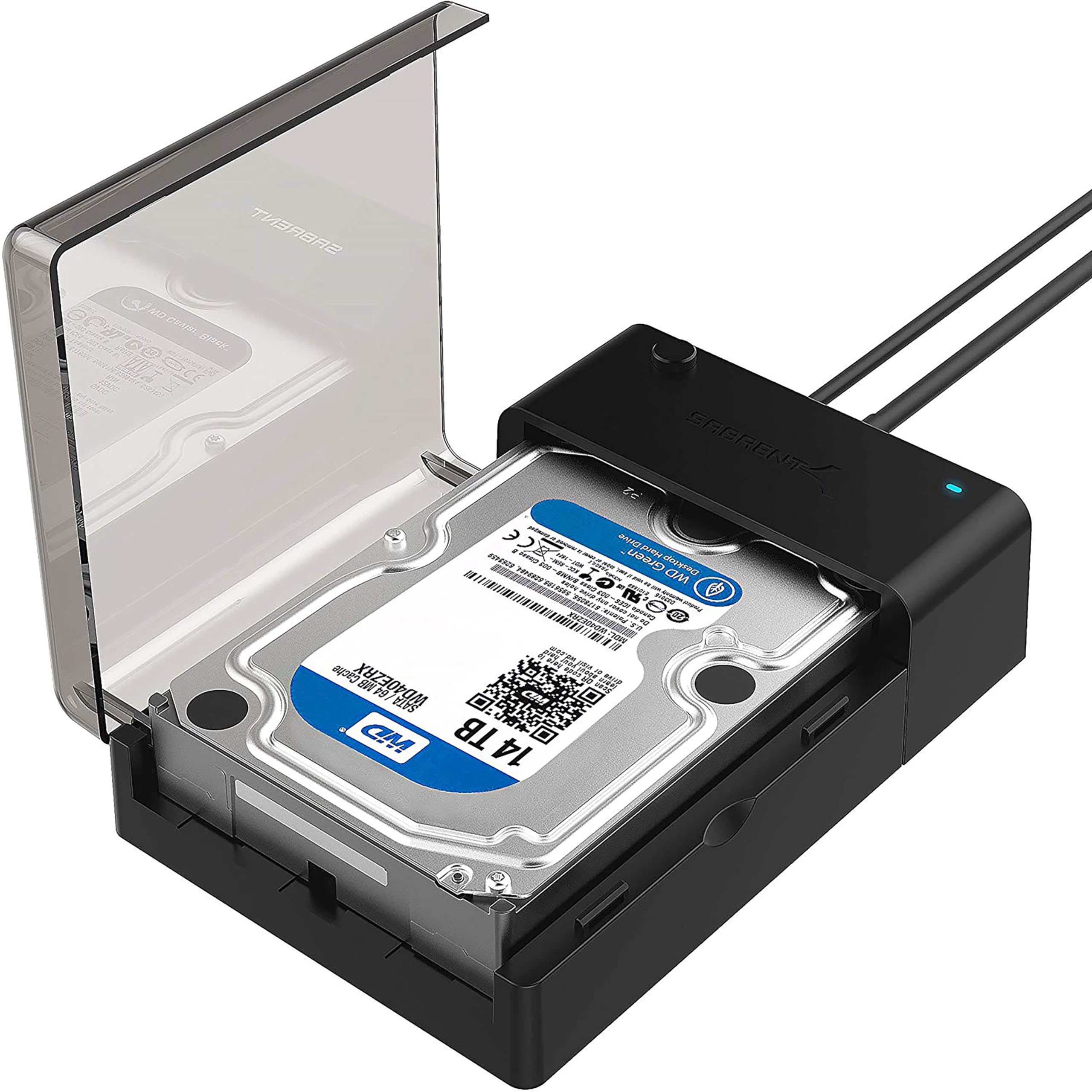
37,000+ ratings
Read Amazon ReviewsSABRENT EC-DFLT
Choose the EC-HD2B when you need two drives connected together or want its offline cloning feature.
The EC-DFLT is a closer fit when you mainly need to access one drive at a time and value its listed UASP support with a compatible computer.
- The EC-DFLT is a single-drive lay-flat dock for 2.5- and 3.5-inch SATA HDDs and SSDs, with UASP support on compatible host systems.
- The EC-HD2B has two bays and an offline cloning function for SATA drives.
Hard Drive Docking Stations alternative
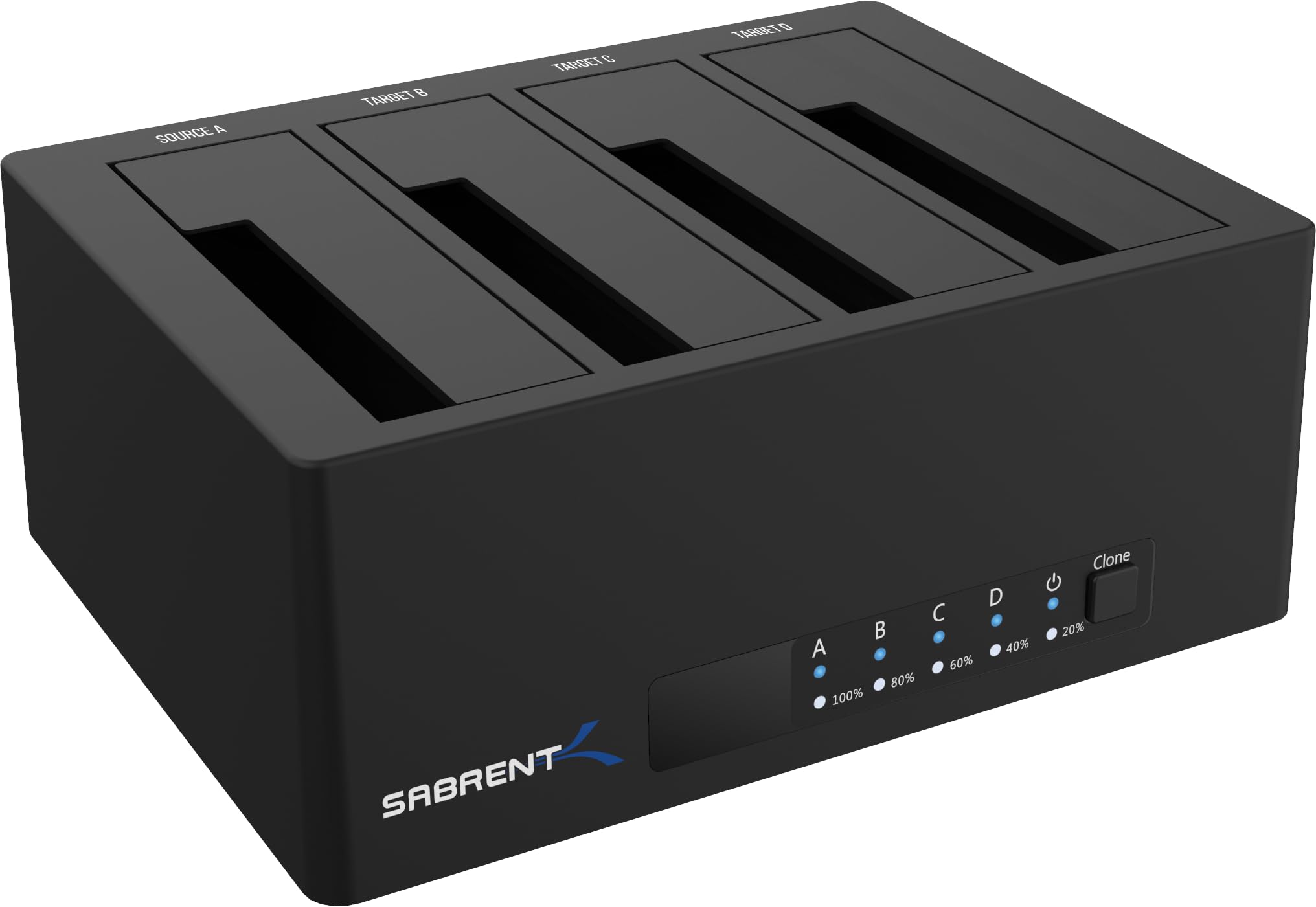
17,000+ ratings
Read Amazon ReviewsSABRENT DS-U3B4
The DS-U3B4 suits buyers who want to manage as many as four SATA drives in one dock. The EC-HD2B is the more focused choice when two bays cover the job and its simpler drive-to-drive workflow is enough.
- The DS-U3B4 holds up to four 2.5- or 3.5-inch SATA drives, connects by USB 3.0, and supports offline cloning with LED progress indicators.
- The EC-HD2B provides two bays for 2.5- or 3.5-inch SATA drives and supports offline cloning.
Is SABRENT EC-HD2B Worth It?
The SABRENT EC-HD2B is worth considering if you need a two-drive SATA dock that can also clone drives offline.
Support for both 2.5- and 3.5-inch formats, plus plug-and-play setup, makes it a flexible fit for ordinary drive access and migration tasks.
Buy with the stated cloning speed and conflicting capacity figures in mind. It is a stronger match for modest, compatible SATA drive jobs than for buyers who need a confirmed capacity above 10TB or expect fast offline copying.
Your review at a glance
17,000+ ratings
Read Amazon ReviewsSABRENT EC-HD2B
A practical fit for users who need to access or clone 2.5- and 3.5-inch SATA drives without installing them inside a computer.
- Dual-bay dock for standard 2.5-inch and 3.5-inch SATA HDDs or SSDs.
- Supports SATA I, II, and III drives.
- Offline drive cloning, with a listed speed of up to 60Mbps.
- USB 3.0 transfer speeds up to 5Gbps; USB 2.0 up to 480Mbps and USB 1.1 up to 12Mbps.